
You glance at your dashboard and notice that amber ABS warning light glowing steadily. You press the brake pedal. Everything feels normal. The car stops just fine. So you start wondering — is this actually a problem, or can I just ignore it?
You’re not alone. Thousands of drivers every month search for answers about their ABS light on but brakes work fine situation. And while your regular brakes may feel perfectly normal right now, that little amber icon carries more significance than most people realize.
In this complete guide from CarCostGuide.com, you’ll learn exactly what triggers this warning, the real risks of ignoring it, and straightforward fixes you can try before spending money at a repair shop.
💡 Quick Note: If you’re dealing with any dashboard warning light for the first time, bookmark our [complete dashboard warning lights guide] for quick reference anytime.
What Does It Mean When Your ABS Light Is On But Brakes Work Fine?
The ABS light illuminates when your vehicle’s Anti-lock Braking System detects a fault within its own components. However, the ABS is a supplementary safety system — it operates independently from your standard hydraulic braking system.
Here’s the critical distinction most drivers miss:
Your regular brakes and your ABS are two separate systems. When the ABS module detects a problem, it essentially disables itself and lets your standard brakes continue functioning normally. That’s why your brakes still feel fine — because the base braking system is unaffected.
In plain English: Your car can still stop. But it loses the ability to prevent wheel lockup during hard braking or on slippery surfaces. That’s a bigger deal than most people think.
| Feature | Standard Brakes | ABS System |
|---|---|---|
| Primary Function | Slow and stop the vehicle | Prevent wheel lockup during hard braking |
| Works When ABS Light Is On? | ✅ Yes | ❌ No |
| Affected by ABS Fault? | Usually not | Yes — system is disabled |
| Critical for Safety? | Absolutely | Especially in emergencies, rain, snow, and ice |
How the ABS System Actually Works
Before diving into causes, understanding how ABS works helps you grasp why the warning light matters — even when your brakes feel normal.
The Basic ABS Components
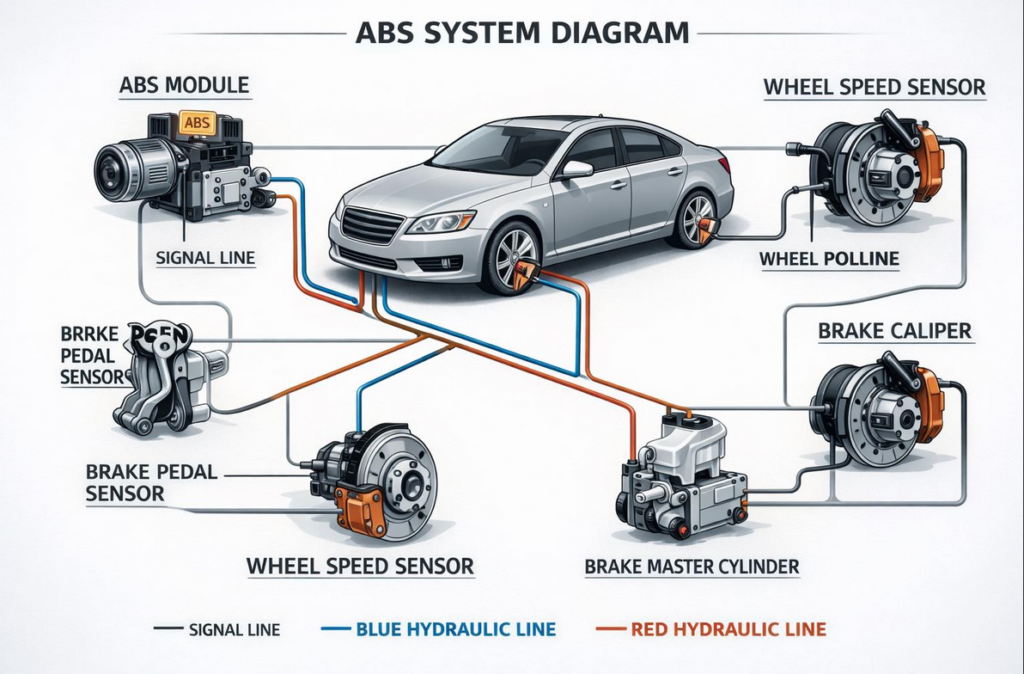
Your ABS relies on four main components working together:
- Wheel speed sensors — Mounted at each wheel, these sensors monitor rotational speed and send data to the ABS module.
- ABS control module — The computer brain that processes sensor data and decides when to intervene.
- Hydraulic modulator/pump — Controls brake fluid pressure to individual wheels during ABS activation.
- Wiring and connectors — Electrical pathways connecting all components.
What Happens During ABS Activation
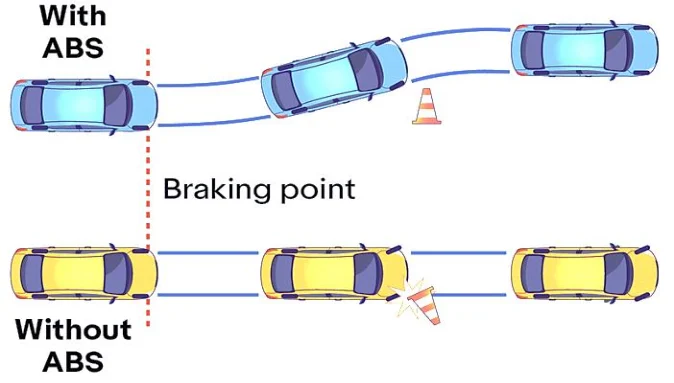
When you slam the brakes hard, one or more wheels may begin to lock up. The wheel speed sensors detect this instantly. The ABS module then rapidly pulses brake pressure to the locking wheel — sometimes up to 15 times per second — preventing it from skidding.
This pulsing action keeps the tire gripping the road surface, which allows you to maintain steering control during emergency stops. Without ABS, locked wheels turn your car into an unsteerable projectile.
7 Most Common Causes of the ABS Light Staying On
When your ABS light is on but brakes work fine, one of these seven causes is almost always responsible.
1. Faulty Wheel Speed Sensor
This is the number one cause — responsible for roughly 40–50% of all ABS light activations, according to repair industry data.
Wheel speed sensors sit near the brake rotors and are constantly exposed to road debris, moisture, salt, and extreme heat. Over time, they corrode, crack, or accumulate metallic debris on their magnetic tips.
Telltale signs:
- ABS light on with no other symptoms
- Traction control light also illuminated
- Speedometer reading incorrectly (in some vehicles)
Common DTC codes: C0035, C0040, C0045, C0050, C1145
Typical repair cost: $75–$250 per sensor (parts and labor)
💡 Pro tip: Before replacing a sensor, try cleaning it and the tone ring with brake cleaner. This $5 fix works about 30% of the time.
2. Damaged Sensor Wiring or Connectors
The wiring running from each wheel speed sensor to the ABS module is vulnerable to damage. Road debris can cut wires. Corrosion can eat through connectors. Rodents sometimes chew through insulation.
Symptoms: Intermittent ABS light that comes and goes, especially over bumps.
3. Low Brake Fluid Level
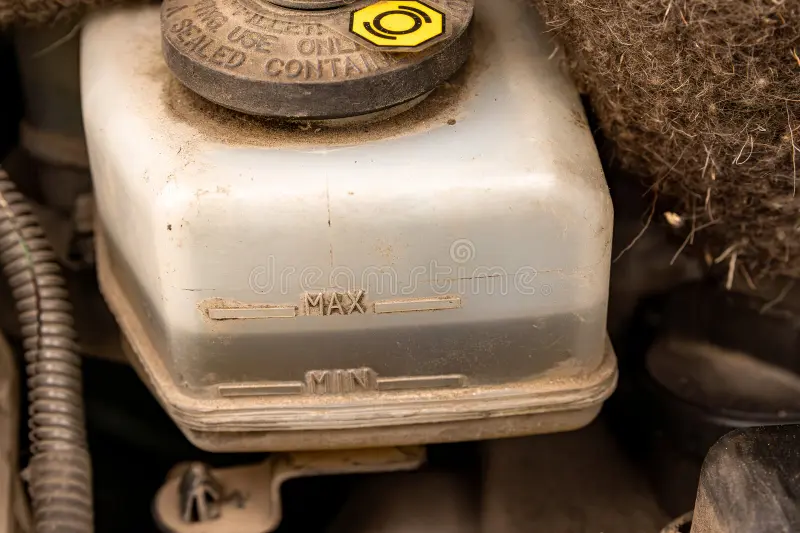
Your ABS hydraulic modulator relies on adequate brake fluid pressure. When fluid drops below the minimum level — due to worn brake pads, a small leak, or simple evaporation over time — the ABS module detects abnormal pressure and triggers the warning.
Quick check: Pop the hood, locate the brake fluid reservoir (usually near the firewall on the driver’s side), and verify the level is between the MIN and MAX lines.
4. Failing ABS Control Module
The ABS module itself can develop internal faults — particularly on vehicles over 10 years old. Moisture intrusion, corrosion on circuit boards, and normal electronic aging all contribute.
Symptoms:
- ABS light stays on permanently
- Multiple ABS-related codes stored
- ABS activates inappropriately at low speeds
Repair cost: $200–$800 for module replacement; $100–$400 for module rebuild/remanufacture
5. Blown ABS Fuse
Sometimes the simplest answer is the right one. A blown fuse in the ABS circuit cuts power to the system and immediately triggers the warning light.
Fix: Check your owner’s manual for the ABS fuse location (usually in the engine bay fuse box), inspect it visually, and replace it with the correct amperage fuse if blown. Cost: under $5.
6. Worn Tone Ring (Reluctor Ring)
Each wheel has a toothed ring (called a tone ring or reluctor ring) that works with the speed sensor. If this ring cracks, rusts, or loses teeth, it sends inaccurate signals to the ABS module.
Common on: Older trucks, SUVs, and vehicles driven in heavy salt/rust belt regions.
7. Bad ABS Pump or Hydraulic Modulator
The ABS hydraulic pump pressurizes brake fluid during ABS activation. When the pump motor fails or internal valves stick, the entire ABS system shuts down.
Symptoms:
- ABS light on
- Grinding or buzzing noise from the ABS module area during braking
- Brake pedal pulsation even on dry, flat roads
Repair cost: $500–$1,500+
Is It Safe to Drive With the ABS Light On?
This is the most critical question drivers ask, so let’s be completely clear.
The short answer: Your vehicle will still stop. Your standard brakes remain fully operational in most cases. However, driving without a functioning ABS system significantly increases your risk during emergency braking situations, especially on wet, icy, or gravel roads.
What You Lose Without ABS
- Anti-lock braking protection — Wheels can lock during hard stops
- Electronic stability control (ESC) — Most vehicles disable ESC when ABS fails, since ESC depends on ABS hardware
- Traction control — Also typically disabled because it shares ABS components
- Steering control during emergency stops — Locked wheels don’t steer
Real-World Risk Assessment
| Driving Condition | Risk Level Without ABS |
|---|---|
| Dry roads, normal driving | Low |
| Wet or rainy roads | Moderate to High |
| Snow, ice, or gravel | High |
| Emergency stop situations | Very High |
| Highway driving at speed | Moderate to High |
According to the National Highway Traffic Safety Administration (NHTSA), ABS reduces the risk of multi-vehicle crashes on wet roads by 18% and significantly reduces fatal run-off-road crashes.
Bottom line: You can drive carefully to a repair shop. But you should not ignore this light long-term. The one time you need ABS and it isn’t there could be the difference between a close call and a serious accident.
💡 CTA: Concerned about repair costs? Check our [complete guide to ABS repair costs by vehicle] to get accurate estimates before visiting a shop.
How to Diagnose and Fix the ABS Light Yourself
Before spending money at a mechanic, try these DIY diagnostic steps. Many ABS light issues are surprisingly simple to resolve at home.
Step 1: Check Brake Fluid Level
- Open the hood and locate the brake fluid reservoir.
- Verify the fluid is between the MIN and MAX marks.
- If low, add DOT 3 or DOT 4 brake fluid (check your owner’s manual for the correct type).
- Important: If the fluid is significantly low, inspect for leaks before simply topping off.
Step 2: Inspect the ABS Fuse
- Locate your vehicle’s fuse box (check your owner’s manual).
- Find the ABS-related fuses.
- Pull each one and inspect for a broken filament.
- Replace any blown fuse with the exact same amperage rating.
Step 3: Visually Inspect Wheel Speed Sensors and Wiring
- Safely raise the vehicle on jack stands.
- Locate the speed sensor at each wheel (usually mounted on the steering knuckle or wheel hub).
- Look for cracked sensors, corroded connectors, or damaged wires.
- Clean sensor tips and tone rings with brake cleaner and a clean cloth.
- Check that connectors are fully seated and free of corrosion.
Step 4: Scan for ABS Diagnostic Codes
A standard OBD-II scanner may not read ABS codes. You’ll need a scanner capable of reading the ABS module specifically.
Budget-friendly options:
- BlueDriver Bluetooth scanner ($100) — Reads ABS codes on most vehicles
- Foxwell NT301 ($60) — Basic ABS code reading
- Many auto parts stores (AutoZone, O’Reilly) offer free ABS code scanning
How to scan:
- Plug the scanner into the OBD-II port (under the driver’s dash).
- Turn the ignition to ON (engine off).
- Select “ABS” or “Chassis” module.
- Read and record all stored codes.
- Research codes to identify the specific faulty component.
Step 5: Clear Codes and Test Drive
After making any repair:
- Clear the ABS codes using your scanner.
- Drive the vehicle at various speeds (including above 25 mph, when ABS typically initializes).
- Monitor whether the light returns.
When to See a Mechanic About Your ABS Light
While DIY diagnosis handles many cases, certain situations require professional expertise:
- The ABS light appears alongside the main brake warning light (this could indicate a hydraulic or mechanical brake problem — much more serious)
- You detect brake fluid leaking from any wheel or under the vehicle
- The brake pedal feels spongy, soft, or sinks to the floor
- You hear grinding or metallic scraping when braking
- Your scanner reveals ABS module or pump-related codes
- The light keeps returning after you’ve cleared codes multiple times
- You lack the tools or confidence for electrical and sensor work
Average diagnostic fee: $50–$150 at an independent shop; $100–$200 at a dealership. Many reputable shops waive this fee if you approve the repair.
💡 CTA: Need a trusted mechanic? Browse our [recommended auto repair shops directory] for verified, customer-reviewed shops near you.
How Much Does It Cost to Fix an ABS Light?
Repair costs vary significantly based on the root cause. Here’s a realistic breakdown:
| ABS Problem | DIY Cost | Mechanic Cost |
|---|---|---|
| Brake fluid top-off | $5–$15 | $20–$50 |
| ABS fuse replacement | $1–$5 | $20–$50 |
| Wheel speed sensor replacement | $20–$80 per sensor | $75–$250 |
| Sensor wiring repair | $10–$30 | $75–$200 |
| Tone ring replacement | $15–$50 | $100–$300 |
| ABS control module replacement | $150–$400 | $300–$800 |
| ABS control module remanufacture | $100–$250 | $200–$500 |
| ABS pump/hydraulic unit replacement | $200–$600 | $500–$1,500 |
| Complete ABS diagnostic scan | $0–$100 | $50–$150 |
Money-saving tip: For ABS module failures, consider a remanufactured module rather than a brand-new unit. Companies like Module Master and BBA Reman rebuild modules at 40–60% of new part prices with warranties.
Tips to Prevent ABS Light Problems
Prevention saves you time, money, and stress. Follow these proven maintenance practices:
- Check brake fluid every 3–6 months. Low fluid is the easiest cause to prevent.
- Flush brake fluid every 2–3 years. Moisture-contaminated fluid corrodes ABS components internally.
- Inspect wheel speed sensors during brake jobs. Clean them and check wiring every time you replace pads or rotors.
- Address rust proactively. Spray exposed sensor wiring and connectors with dielectric grease or anti-corrosion spray, especially in salt belt states.
- Don’t ignore intermittent warnings. A light that flickers on and off is an early warning of a worsening problem.
- Keep your battery healthy. Low voltage can confuse ABS modules and cause false warnings.
- Follow your manufacturer’s maintenance schedule. It exists for a reason.
📸 [Image Placement #6] — Maintenance checklist infographic for ABS system care
Frequently Asked Questions (FAQ)
Can I pass a vehicle inspection with the ABS light on?
It depends on your state. In most US states, a standalone ABS light will not cause an inspection failure because ABS is considered a supplementary safety system. However, some states — including Maryland, Virginia, and New York — do include ABS in their safety inspection criteria. Always check your state’s specific requirements.
Why is my ABS light on but brakes work fine after replacing brake pads?
New brake pads change the caliper piston position, which can temporarily affect brake fluid level in the reservoir. If the fluid drops slightly during the pad swap, it may trigger the ABS light. Check the fluid level, top it off, and clear the code. The light should stay off.
Can a bad wheel bearing cause the ABS light to come on?
Yes. On many modern vehicles, the wheel speed sensor is integrated into the wheel bearing hub assembly. A worn or failing bearing can cause the sensor to read erratically, triggering the ABS warning. In this case, replacing the entire hub assembly resolves both the bearing and the sensor issue.
Will disconnecting the battery reset the ABS light?
Disconnecting the battery for 15–30 minutes clears some stored codes and may temporarily turn off the ABS light. However, if the underlying fault still exists, the light will return within a few drive cycles. Always fix the root cause rather than relying on resets.
Does the ABS light affect my car insurance or warranty?
An illuminated ABS light does not directly affect your insurance premiums. However, if you’re involved in an accident and the investigation reveals you were driving with a known ABS fault, it could potentially complicate your claim. For warranty purposes, ignoring a warning light and allowing further damage may void coverage on related components.
How long can I drive with the ABS light on?
Technically, you can drive indefinitely because your standard brakes still function. However, safety experts strongly recommend fixing the issue within one to two weeks. The longer you drive without ABS, the greater your exposure to risk during emergency situations — especially in bad weather.
Can I fix the ABS light myself?
Yes, in many cases. Simple fixes like topping off brake fluid, replacing a blown fuse, or cleaning a wheel speed sensor require minimal tools and experience. However, replacing ABS modules, hydraulic pumps, or performing electrical repairs may require professional help and specialized equipment.
What’s the difference between the ABS light and the brake warning light?
The ABS light indicates a fault specifically within the anti-lock braking system. The brake warning light (usually a red circle with an exclamation mark or the word “BRAKE”) signals a problem with the primary hydraulic braking system — which is far more serious. If both lights illuminate simultaneously, stop driving immediately and have the vehicle towed.
Final Thoughts
Seeing the ABS light on but brakes work fine feels confusing — and understandably so. Your brakes stop the car perfectly, yet your dashboard insists something is wrong. Now you understand why: your standard brakes and your ABS are separate systems, and the ABS has simply taken itself offline.
Here are the key takeaways to remember:
- Your regular brakes still work when the ABS light is on. The car will stop.
- You lose anti-lock protection, traction control, and stability control — all critical safety features during emergencies and adverse weather.
- The most common cause is a faulty wheel speed sensor — an affordable and often DIY-friendly repair.
- You should not ignore this light long-term. Fix it within one to two weeks for your safety.
- Many ABS light issues cost under $250 to fix. Start with simple checks (fluid, fuse, sensors) before assuming the worst.
The ABS light on but brakes work fine scenario is manageable — but only if you take action. The next time bad weather hits or a deer jumps in front of your truck, you’ll want every safety system working in your favor.
Have you dealt with an ABS light issue on your vehicle? Drop a comment below and share your experience — your story might help another driver facing the same problem. And for more diagnostic guides, repair cost breakdowns, and expert maintenance tips, explore CarCostGuide.com.