
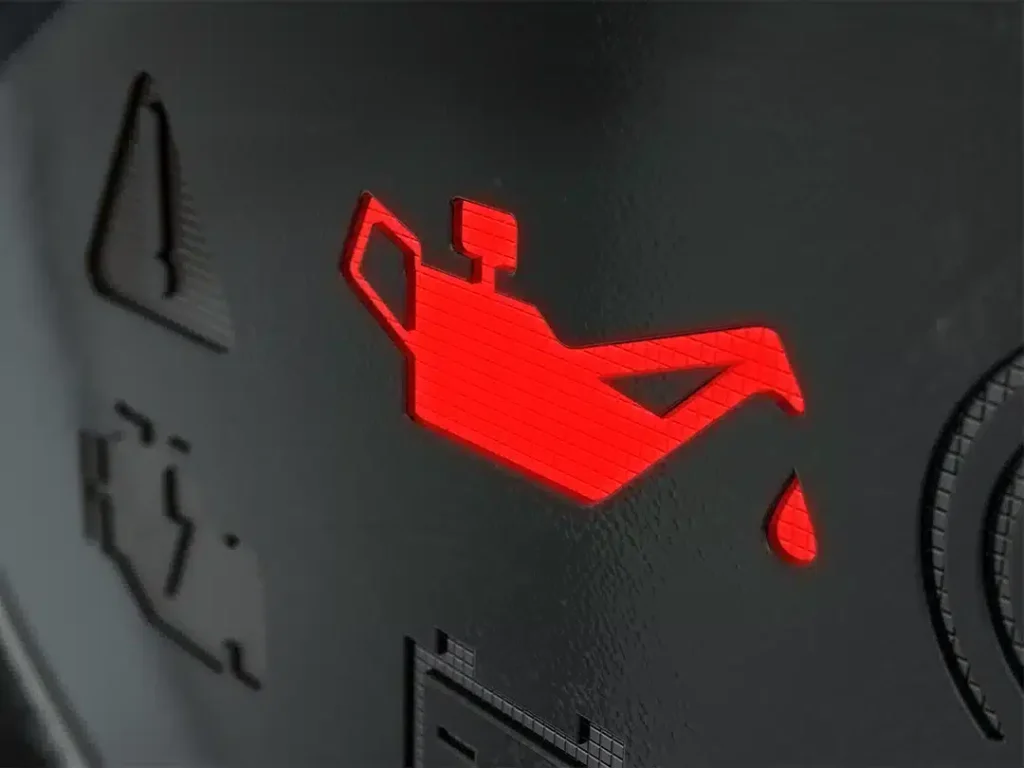
You’re sitting at a red light when you notice it — that small, oil-can-shaped warning light flickering on your dashboard. The engine sounds normal. Nothing seems wrong. But the moment you press the gas and start moving, the light disappears.
What just happened? And more importantly, should you be worried?
When the oil pressure warning light at idle activates, your engine is sending a distress signal that you absolutely cannot afford to ignore. Oil pressure is quite literally your engine’s lifeblood. Without adequate pressure, metal components grind against each other with devastating consequences — and engine damage can happen in as little as 30 seconds of oil starvation.
In this expert guide from CarCostGuide.com, you’ll learn exactly what causes oil pressure to drop at idle, how dangerous it truly is, and the specific steps to diagnose and fix the problem before it destroys your engine.
💡 Seeing other dashboard warnings? Explore our [complete dashboard warning lights guide] to understand every indicator on your cluster.
What Does the Oil Pressure Warning Light Mean?
The oil pressure warning light activates when engine oil pressure drops below a safe minimum threshold — typically around 5–10 PSI at idle, depending on the manufacturer. Your engine’s oil pressure sending unit constantly monitors pressure and sends data to the dashboard gauge or warning light circuit.
At idle, your engine spins at its lowest RPM (usually 600–900 RPM), which means the oil pump operates at its slowest speed. This naturally produces lower oil pressure compared to highway driving. However, pressure should still remain within a safe operating range.
When pressure falls below that safe range — even briefly — the warning light illuminates.
| Engine Speed | Normal Oil Pressure Range | Warning Threshold |
|---|---|---|
| Idle (600–900 RPM) | 15–30 PSI | Below 5–10 PSI |
| Normal driving (2,000–3,000 RPM) | 25–65 PSI | Below 10–15 PSI |
| Highway (3,000+ RPM) | 40–70 PSI | Below 20 PSI |
Why Does Your Oil Pressure Warning Light Come On at Idle?
When your oil pressure warning light at idle activates, one of these seven causes is almost always responsible.
1. Low Engine Oil Level
This is the simplest and most common cause. When oil level drops significantly — due to consumption, a slow leak, or a missed oil change — the pump can’t maintain adequate pressure, especially at low RPMs.
Even being one quart low can make the difference between normal pressure and a flickering warning light at idle.
2. Worn or Degraded Oil
Oil breaks down over time. As it ages, it loses viscosity — meaning it becomes thinner and less capable of maintaining pressure. Running thousands of miles past your oil change interval virtually guarantees reduced pressure at idle.
Real-world example: Using 5W-30 oil that has degraded to the viscosity of water won’t build proper pressure at low RPM — even when the oil level reads full.
3. Faulty Oil Pressure Sending Unit
The oil pressure sending unit (also called the oil pressure sensor or switch) can fail, corrode, or develop electrical faults. When this happens, it sends false readings to the dashboard — triggering the warning light even when actual oil pressure is perfectly normal.
Key clue: If the light flickers at idle but your engine sounds completely healthy with no unusual noises, the sensor is a prime suspect.
💡 CTA: Wondering what sensor replacement costs for your vehicle? Check our [oil pressure sensor cost guide by make and model] for accurate estimates.
4. Worn Oil Pump
The oil pump is a mechanical component that wears over time. As internal clearances increase, the pump loses efficiency — particularly at low RPM when it spins slowly. High-mileage engines (150,000+ miles) are especially vulnerable to oil pump wear.
5. Clogged Oil Pickup Screen
The oil pickup tube sits at the bottom of the oil pan with a mesh screen that filters debris before oil enters the pump. Sludge buildup from infrequent oil changes can partially or fully clog this screen, starving the pump of oil.
6. Worn Engine Bearings
Engine bearings — particularly crankshaft main bearings and rod bearings — create tight clearances that help maintain oil pressure. As bearings wear, clearances increase, and oil escapes more easily. This causes pressure to drop at idle first, since the pump operates at its lowest output.
Warning sign: A knocking or tapping sound at idle that increases with RPM often indicates worn bearings alongside the pressure light.
7. Incorrect Oil Viscosity
Using oil that’s too thin for your engine’s specifications — or for the current climate — reduces pressure. For example, using 0W-16 in an engine designed for 5W-30 will produce noticeably lower pressure readings, especially at idle when the engine is warm.
📸 [Image #2] — Infographic showing all 7 causes with icons
Is the Oil Pressure Warning Light at Idle Dangerous?
Yes — this is one of the most dangerous warning lights your vehicle can display. Unlike many dashboard warnings that allow you some grace period, low oil pressure can cause catastrophic engine damage within minutes.
Here’s what happens inside your engine when oil pressure drops too low:
- Metal-on-metal contact between crankshaft, bearings, camshaft, and cylinder walls
- Extreme heat buildup from friction — temperatures can exceed 500°F at contact points
- Bearing seizure — bearings weld themselves to the crankshaft
- Spun bearings — bearing material breaks apart and contaminates the entire oil system
- Complete engine failure — connecting rod breaks through the engine block (“throwing a rod”)
According to engine rebuilding industry data, over 60% of catastrophic engine failures are linked to oil pressure or lubrication problems. A new engine or rebuild typically costs $3,000–$7,000+ — making prevention far cheaper than the cure.
| Time Without Adequate Oil Pressure | Potential Damage |
|---|---|
| 0–30 seconds | Accelerated bearing wear begins |
| 30–60 seconds | Scoring on crankshaft journals |
| 1–5 minutes | Bearing damage likely |
| 5+ minutes | Engine seizure possible |
⚠️ Critical Rule: If the oil pressure light stays on steadily at idle (not just a brief flicker), turn off your engine immediately and do not restart until you’ve identified the cause.
📸 [Image #3] — Damage progression infographic showing engine wear timeline
How to Diagnose Oil Pressure Problems at Idle
Follow these steps to determine why your oil pressure warning light at idle is activating.
Step 1: Check the Oil Level and Condition
- Park on a level surface and wait 5 minutes after shutting off the engine.
- Pull the dipstick, wipe it, reinsert fully, and pull again.
- Verify the oil level is between the MIN and MAX marks.
- Examine the oil’s color and consistency — it should be amber to dark brown, not black and gritty.
- Smell the oil — a burnt odor indicates severe degradation.
Step 2: Listen for Unusual Noises
With the engine idling, listen carefully for:
- Ticking or tapping — possible lifter, camshaft, or rocker arm issue
- Knocking or rumbling — potential crankshaft bearing wear (serious)
- Whining from the front of the engine — possible oil pump issue
Step 3: Test with a Mechanical Oil Pressure Gauge
This is the definitive diagnostic step. An aftermarket mechanical gauge ($15–$40) gives you actual pressure readings — bypassing a potentially faulty sensor.
- Locate the oil pressure sending unit on your engine.
- Remove the sending unit.
- Thread in the mechanical gauge adapter.
- Start the engine and read the pressure at idle.
- Normal idle pressure: 15–30 PSI (warm engine). Below 10 PSI indicates a real problem.
Step 4: Change the Oil and Filter
If the oil is overdue for a change or appears degraded, perform a fresh oil change with the manufacturer-recommended viscosity and a quality filter. This alone resolves a surprising number of oil pressure light issues.
📸 [Image #4] — Photo showing mechanical oil pressure gauge installation
How to Fix Oil Pressure Warning Light Issues
Based on your diagnosis, apply the appropriate fix:
Fix 1: Top Off or Change the Oil
If oil level is low, add the correct type immediately. If the oil is old or degraded, perform a complete oil and filter change. Cost: $30–$80 (DIY) or $50–$120 (shop).
Fix 2: Replace the Oil Pressure Sending Unit
If the mechanical gauge shows normal pressure but the dashboard light stays on, the sensor is faulty. Cost: $10–$40 (part) or $50–$150 (installed).
Fix 3: Clean or Replace the Oil Pickup Screen
This requires dropping the oil pan — a moderate DIY job on some vehicles. Cost: $50–$200 (DIY) or $200–$500 (shop).
Fix 4: Replace the Oil Pump
If the mechanical gauge confirms low pressure and the oil level and condition are good, the pump likely needs replacement. Cost: $150–$500 (DIY) or $400–$1,200 (shop).
Fix 5: Address Engine Bearing Wear
If you hear knocking alongside low pressure, bearing replacement or engine rebuild may be necessary. Cost: $1,500–$4,000+ (bearing replacement) or $3,000–$7,000+ (full rebuild).
💡 CTA: Need accurate repair estimates for your specific vehicle? Browse our [engine repair cost calculator] for instant pricing.
📸 [Image #5] — Cost comparison chart for all fixes
Oil Pressure Light Repair Costs
| Problem | DIY Cost | Mechanic Cost |
|---|---|---|
| Oil top-off | $5–$15 | $10–$30 |
| Oil and filter change | $30–$80 | $50–$120 |
| Oil pressure sensor replacement | $10–$40 | $50–$150 |
| Oil pickup screen cleaning/replacement | $50–$200 | $200–$500 |
| Oil pump replacement | $150–$500 | $400–$1,200 |
| Engine bearing replacement | N/A (advanced) | $1,500–$4,000 |
| Engine rebuild | N/A | $3,000–$7,000+ |
| Engine replacement | N/A | $4,000–$10,000+ |
The takeaway is clear: A $50 oil change today prevents a $7,000 engine rebuild tomorrow.
How to Prevent Oil Pressure Problems
These simple habits protect your engine from oil pressure failures:
- Change your oil on schedule — follow the manufacturer’s recommended interval, not the “every 3,000 miles” myth. Most modern vehicles use synthetic oil with 5,000–10,000 mile intervals.
- Check your oil level monthly — don’t rely solely on dashboard warnings. A 30-second dipstick check catches low levels early.
- Use the correct oil viscosity — always match the specification in your owner’s manual.
- Choose quality oil filters — cheap filters restrict flow and bypass earlier. Brands like Wix, Purolator, and OEM filters outperform budget options.
- Don’t ignore leaks — even a small oil drip adds up over thousands of miles.
- Avoid extended idling — prolonged idling produces the lowest oil pressure your engine experiences. If you idle frequently (delivery drivers, taxi operators), consider shorter oil change intervals.
- Address engine noises immediately — ticking and knocking sounds are often early warnings of lubrication problems.
📸 [Image #6] — Preventive maintenance checklist infographic
Frequently Asked Questions
Why does my oil light come on at idle but go off when I accelerate?
At idle, your oil pump operates at its slowest speed, producing minimum pressure. If oil level is slightly low, the oil is degraded, or internal components are worn, pressure drops just enough to trigger the light. When you accelerate, the pump spins faster, pressure rises, and the light turns off. This pattern indicates a real problem that will worsen over time.
Can I drive with the oil pressure light flickering at idle?
You can drive very short distances — only far enough to reach a safe location or repair shop. However, every minute spent with inadequate oil pressure causes accelerated wear on engine bearings and other critical components. Never ignore a flickering oil light, even if the engine sounds fine. Check your oil level immediately.
Does low oil always cause the oil pressure light to come on?
Not always. You can be low on oil without triggering the light if pressure remains above the warning threshold. Conversely, the light can activate with a full oil level if the sensor is faulty, the oil is severely degraded, or internal engine components are worn. A mechanical pressure gauge test gives you the definitive answer.
Can a bad oil filter cause low oil pressure at idle?
Yes. A clogged oil filter restricts flow, reducing the pressure that reaches engine components. Additionally, extremely cheap filters may have weak bypass valves that open too early, allowing unfiltered oil to circulate at reduced pressure. Always use a quality filter rated for your engine.
How much does it cost to fix low oil pressure?
Costs range from $5 (oil top-off) to $7,000+ (engine rebuild), depending on the root cause. The most common fixes — oil changes and sensor replacements — typically cost between $50 and $150. Getting a proper diagnosis with a mechanical pressure gauge before authorizing expensive repairs saves you from unnecessary costs.
What oil pressure is too low at idle?
Most engines should maintain at least 15–20 PSI at warm idle. Pressure below 10 PSI is generally considered dangerously low, and anything below 5 PSI at idle indicates imminent risk of engine damage. However, exact specifications vary by manufacturer — consult your vehicle’s service manual for the precise threshold.
Can the wrong oil viscosity cause the oil pressure light to come on?
Absolutely. Oil that’s too thin for your engine’s design — such as 0W-16 in an engine requiring 5W-30 — produces lower pressure because it flows through clearances more easily. Always use the viscosity grade specified in your owner’s manual, and consider the climate you drive in.
Will an oil change fix the oil pressure light?
In many cases, yes. If degraded oil or a clogged filter caused the pressure drop, a fresh oil change with the correct viscosity and a quality filter restores normal pressure. However, if the problem is mechanical — worn bearings, a failing pump, or a clogged pickup screen — an oil change alone won’t resolve it.
Final Thoughts
The oil pressure warning light at idle is not a warning you can safely put off until next weekend. Unlike many dashboard indicators that give you days or weeks to respond, low oil pressure can destroy an engine in minutes. The good news? Most causes are surprisingly affordable to fix when caught early.
Key takeaways to remember:
- Low oil level and degraded oil are the most common causes — and the cheapest to fix. A $50 oil change is your first line of defense.
- A flickering light at idle signals real pressure problems, not just a glitch. Even if the light disappears when you accelerate, the underlying issue is worsening.
- A mechanical pressure gauge test is the definitive diagnostic step — don’t replace expensive parts based solely on a warning light that could be a faulty $20 sensor.
- Engine damage from oil starvation is catastrophic and expensive — $3,000 to $7,000+ for a rebuild. Prevention costs a fraction of that.
- The oil pressure warning light at idle demands immediate attention — turn off the engine, check the dipstick, and diagnose before driving further.
Your engine depends on oil pressure the same way your body depends on blood pressure. When the warning light tells you something is wrong, believe it — and act fast.
Have you dealt with an oil pressure light that only appears at idle? What turned out to be the cause? Share your story in the comments — your experience could save another driver’s engine. For more expert repair guides and cost breakdowns, visit CarCostGuide.com.