
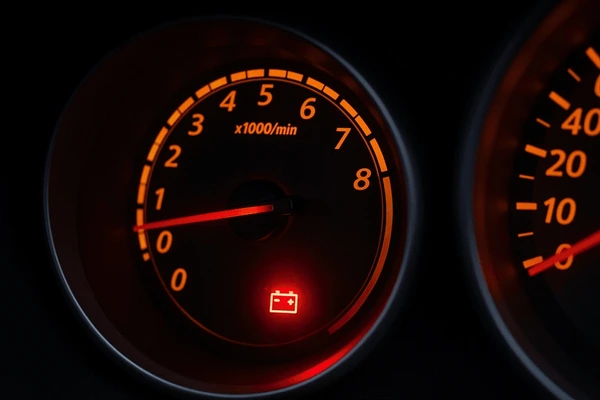
You’re cruising down the highway when that unmistakable red battery icon suddenly glows on your dashboard. Your grip tightens on the steering wheel. Your mind races. Is the car about to die? Should I pull over right now?
It’s a scenario that thousands of drivers face every single day — and how you respond in the next few minutes matters enormously. When the red battery light comes on while driving, it means your vehicle’s charging system isn’t working correctly. Your car is essentially surviving on stored battery power alone, and that power will run out.
In this guide from CarCostGuide.com, you’ll learn exactly what triggers this warning, the immediate steps you need to take, and how to fix it before you’re left stranded.
💡 Need help with other dashboard warnings? Check out our [complete dashboard warning lights guide] for quick answers to any warning light.
What Does the Red Battery Light Mean?
The red battery light — officially called the charging system warning indicator — tells you that your vehicle’s electrical system is no longer receiving adequate charge from the alternator. Under normal conditions, your alternator generates electricity while the engine runs, powering all electrical components and keeping the battery charged.
When this system fails, the battery light illuminates. Your car then runs entirely on remaining battery charge, which typically lasts only 30 to 60 minutes before critical systems begin shutting down.
| System Status | Alternator Working | Alternator Failed |
|---|---|---|
| Battery charging | ✅ Yes | ❌ No |
| Electrical systems powered | ✅ Fully | ⚠️ Draining battery |
| Time before car dies | Indefinite | 30–60 minutes |
| Dashboard warning | No light | Red battery light ON |
Top Causes When the Red Battery Light Comes On While Driving
Several problems can trigger this warning. Here are the most common culprits, ranked by frequency.
1. Failing Alternator
The alternator is responsible for roughly 95% of battery light activations. Internal components — like the voltage regulator, diode bridge, or brushes — wear out over time. Most alternators last between 80,000 and 150,000 miles before needing replacement.
Warning signs alongside the light:
- Dimming headlights and interior lights
- Electrical accessories slowing down
- Whining or grinding noise from the engine bay
2. Worn or Broken Serpentine Belt
The serpentine belt physically drives the alternator. If this belt snaps, cracks, or slips off its pulleys, the alternator stops spinning entirely — and your battery light immediately activates.
Quick clue: A sudden squealing noise followed by the battery light almost always points to a belt problem.
3. Corroded or Loose Battery Connections
Corrosion buildup on battery terminals creates resistance that disrupts the charging circuit. Similarly, loose cable connections prevent proper electrical flow between the battery, alternator, and your vehicle’s systems.
Visual check: Look for white, green, or blue crusty buildup on the battery posts.
4. Dead or Dying Battery
Car batteries typically last 3 to 5 years. An old battery that can no longer hold a charge will trigger the warning light because the charging system detects abnormal voltage levels.
5. Faulty Voltage Regulator
The voltage regulator controls how much charge the alternator sends to the battery. When it fails, charging becomes erratic — either overcharging (which damages the battery) or undercharging (which triggers the light).
6. Damaged Wiring
Frayed, corroded, or disconnected wiring between the alternator, battery, and fuse box can interrupt the charging circuit. This cause is especially common in older vehicles or those driven in harsh climates.
📸 [Image #2] — Infographic showing the 6 common causes with simple icons
What to Do Immediately When You See the Battery Light
When the red battery light comes on while driving, follow these steps right away:
- Stay calm. Your car won’t die instantly. You have a limited window of battery power.
- Turn off non-essential electrical accessories. Kill the radio, air conditioning, heated seats, phone chargers, and any other drains on the battery.
- Keep headlights on if it’s dark. Safety comes first — never drive without lights.
- Avoid stopping the engine. If you turn the car off, it may not restart.
- Drive to the nearest safe location. Head for a repair shop, gas station, or safe parking area.
- Call for roadside assistance if needed. If the car starts losing power or stalling, don’t push it.
⚠️ Critical Warning: If you notice your temperature gauge rising alongside the battery light, pull over immediately. The serpentine belt may have broken, which also disables your water pump and can cause rapid engine overheating.
📸 [Image #3] — Step-by-step emergency response infographic
💡 CTA: Want to know what roadside assistance costs? Read our [roadside assistance cost comparison guide] to find the best plan for your needs.
Is It Safe to Drive With the Battery Light On?
No — not for long. While your engine will continue running temporarily on stored battery power, you’re operating on borrowed time.
Here’s what happens as your battery drains:
- First 10–20 minutes: Lights may dim slightly. Most systems still function.
- 20–40 minutes: Power steering may become heavy (on electric power steering systems). Lights dim noticeably.
- 40–60 minutes: Engine may start misfiring. Fuel pump weakens. Dashboard gauges become erratic.
- Beyond 60 minutes: Engine stalls and will not restart.
According to AAA’s automotive research, battery and charging system failures are the number one reason for roadside assistance calls in the United States — accounting for nearly 30% of all service requests.
Bottom line: Drive only far enough to reach a safe location or repair shop. Every mile you drive drains your remaining battery life.
How to Diagnose the Battery Light Problem
Before paying for repairs, you can perform basic checks yourself:
Visual Inspection
- Battery terminals: Look for corrosion or loose connections.
- Serpentine belt: Check for cracks, fraying, glazing, or a missing belt.
- Wiring: Inspect cables running to and from the alternator and battery.
Voltage Test
Using a multimeter (available for $15–$30 at any auto parts store):
- Set the multimeter to DC voltage.
- With the engine off, touch probes to battery terminals. A healthy battery reads 12.4–12.7 volts.
- Start the engine. A working alternator should produce 13.5–14.5 volts.
- If voltage stays below 13 volts with the engine running, your alternator is likely failing.
Free Testing Options
Most auto parts stores — including AutoZone, O’Reilly Auto Parts, and Advance Auto Parts — offer free battery and alternator testing. This takes about 10 minutes and gives you a definitive answer.
📸 [Image #4] — Photo showing multimeter testing battery voltage
How Much Does It Cost to Fix?
Repair costs depend entirely on the root cause:
| Problem | DIY Cost | Mechanic Cost |
|---|---|---|
| Battery terminal cleaning | $5–$10 | $20–$50 |
| Serpentine belt replacement | $20–$50 | $75–$200 |
| Battery replacement | $80–$200 | $100–$300 |
| Alternator replacement | $150–$350 | $300–$700 |
| Voltage regulator replacement | $50–$150 | $150–$400 |
| Wiring repair | $10–$50 | $75–$250 |
Pro tip: Replacing an alternator yourself can save you $150–$350 in labor costs. On most vehicles, it’s a 1–2 hour job with basic hand tools.
📸 [Image #5] — Cost comparison chart graphic
How to Prevent Battery Light Problems
These simple habits dramatically reduce your risk:
- Test your battery annually — especially before winter. Cold weather kills weak batteries.
- Inspect the serpentine belt every 30,000 miles. Replace it every 60,000–100,000 miles proactively.
- Clean battery terminals twice a year using a wire brush and baking soda solution.
- Listen for unusual noises. A squealing or grinding sound often precedes alternator failure.
- Replace your battery every 4–5 years — don’t wait for it to strand you.
- Check your alternator output during routine maintenance visits.
📸 [Image #6] — Preventive maintenance checklist infographic
Frequently Asked Questions
Why did my red battery light come on while driving then go off?
An intermittent battery light usually signals a loose serpentine belt, corroded battery terminal, or a failing alternator that still works partially. The connection may temporarily restore itself through vibration. However, this indicates a worsening problem — have it inspected promptly before it fails completely.
Can a bad battery cause the battery light to come on while driving?
Yes. A battery that can no longer hold a proper charge creates abnormal voltage readings in the charging circuit. The vehicle’s computer detects this imbalance and illuminates the battery warning light. Batteries older than 4–5 years are especially prone to this issue.
How long can I drive with the red battery light on?
Most vehicles can run for 30 to 60 minutes on battery power alone after the alternator stops charging. However, this varies significantly based on your battery’s age, health, and how many electrical accessories you’re using. Minimize electrical usage and reach a safe location as quickly as possible.
What does it mean when the battery light and check engine light come on together?
When both lights illuminate simultaneously, it often means the voltage drop is affecting engine sensors and computer systems. Low voltage causes erratic sensor readings, which triggers the check engine light. Fixing the charging system issue typically resolves both warning lights.
Can I jump-start my car if the battery light was on?
Yes, but jump-starting only provides temporary power. If your alternator has failed, the car will run only as long as the jump-started battery holds charge — usually 30–60 minutes. You’ll need to fix the underlying charging system problem to keep the car running.
Does the battery light always mean alternator failure?
No. While the alternator is the most common cause, the battery light can also indicate a broken serpentine belt, corroded connections, faulty wiring, a bad voltage regulator, or a dying battery. A proper voltage test helps pinpoint the exact cause quickly.
How much does it cost to fix the battery light issue?
Costs range from $5 (terminal cleaning) to $700 (alternator replacement at a mechanic). The average repair falls between $100 and $400. Getting a free diagnostic test at an auto parts store helps you understand the exact cost before committing to repairs.
Should I call a tow truck when the battery light comes on?
Call a tow truck if your vehicle starts losing power, stalling, or overheating. If the light just appeared and the car runs normally, you can usually drive carefully to a nearby shop. However, if the nearest repair facility is more than 20–30 minutes away, a tow is the safer option.
Final Thoughts
When the red battery light comes on while driving, it’s your vehicle telling you that the charging system has failed and you’re running on borrowed time. While it’s easy to panic, now you know exactly what to do — reduce electrical loads, keep driving to safety, and diagnose the problem before it leaves you stranded.
Key takeaways to remember:
- The battery light means your alternator has likely stopped charging — your car runs on stored battery power only.
- You have approximately 30–60 minutes of driving before the battery dies completely.
- Turn off all non-essential electrical accessories immediately to extend your window.
- The most common cause is a failing alternator, but it could also be a broken belt, bad battery, or corroded connections.
- Most repairs cost between $100 and $400 — and many are simple DIY jobs.
Don’t let a $200 alternator turn into a $2,000 problem by ignoring the warning signs. The red battery light comes on while driving as a final alert — respect it, act on it, and you’ll save yourself time, money, and the frustration of being stranded.
Have you ever had the battery light come on unexpectedly? What was the cause? Share your experience in the comments below — your story could help another driver in the same situation. For more expert repair guides and cost breakdowns, explore CarCostGuide.com.