
There’s nothing quite like the frustration of watching a dashboard warning light refuse to go away. You’ve restarted the car. You’ve checked the obvious. Yet that stubborn traction control indicator keeps staring back at you.
When your traction control light won’t turn off, it signals that your vehicle’s traction control system (TCS) has detected a fault and disabled itself. While your car will still drive, you’ve lost a critical safety system that prevents wheel spin on slippery surfaces.
In this expert guide from CarCostGuide.com, you’ll learn the seven most common causes behind a persistent traction control warning light, straightforward fixes you can try yourself, and exactly when you need professional help.
💡 Dealing with multiple dashboard warnings? Explore our [complete guide to dashboard warning lights] for fast answers to any indicator on your cluster.
What Does the Traction Control Light Mean?
The traction control light indicates the status of your vehicle’s Traction Control System (TCS). This system monitors wheel speed through sensors at each wheel. When it detects one or more wheels spinning faster than the others — meaning loss of traction — it automatically reduces engine power or applies braking to the slipping wheel.
A briefly flashing TCS light during rain or snow is completely normal. It means the system is actively working. However, when the traction control light won’t turn off and stays illuminated continuously, the system has detected an internal fault and shut itself down.
| TCS Light Behavior | Meaning | Action Needed |
|---|---|---|
| Flashing briefly | System actively engaging | Normal — no action needed |
| Steady / always on | System fault detected | Diagnose and repair |
| Light with “OFF” indicator | System manually disabled | Check TCS button |
| TCS + ABS lights together | Shared component failure | Immediate diagnosis recommended |
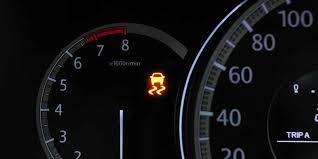
Why Your Traction Control Light Won’t Turn Off
Here are the seven most common reasons your traction control warning light stays on persistently.
1. Faulty Wheel Speed Sensor
Wheel speed sensors are the most frequent culprit — responsible for an estimated 40–50% of TCS light issues. These sensors sit near each wheel’s brake rotor and constantly measure rotational speed. Road salt, mud, debris, and general wear corrode or damage them over time.
When a sensor fails or sends erratic data, the TCS computer can’t accurately monitor traction. As a result, it disables the entire system and keeps the warning light on.
Common DTC codes: C0035, C0040, C0045, C0050
2. Damaged Sensor Wiring
The wiring connecting wheel speed sensors to the TCS module is exposed to harsh under-vehicle conditions. Corrosion, rodent damage, road debris impacts, and general vibration can break or fray these wires. Even a minor wiring fault causes intermittent or permanent TCS failure.
3. Low Brake Fluid
Your traction control system shares hydraulic components with your braking system. When brake fluid drops below the minimum level — due to worn pads, a small leak, or evaporation — the TCS detects abnormal pressure and triggers the warning light.
💡 CTA: Wondering about brake maintenance costs? Check our [brake repair cost breakdown by vehicle] for accurate pricing estimates.
4. Malfunctioning ABS Module
The TCS and ABS (Anti-lock Braking System) share the same control module in most modern vehicles. When the ABS module develops internal faults — from moisture intrusion, corroded circuits, or software glitches — it often takes the traction control system down with it.
Telltale sign: Both the ABS and traction control lights illuminate simultaneously.
5. Bad Steering Angle Sensor
The steering angle sensor tells the TCS which direction you’re turning the wheel. If this sensor fails or becomes miscalibrated — often after a wheel alignment, tire replacement, or battery disconnect — the system can’t calculate proper traction intervention.
Common after: Wheel alignments, tire rotations, or battery replacements where the sensor wasn’t recalibrated.
6. Worn or Mismatched Tires
Here’s one most drivers overlook. Tires with significantly different tread depths or mixing tire sizes creates speed differences between wheels that the TCS interprets as wheel spin. Even one tire that’s substantially more worn than the others can keep the light on.
7. TCS Button Accidentally Pressed
Before diving into complex diagnostics, check the simplest possibility. Most vehicles have a TCS on/off button — usually located on the dashboard or center console. You or a passenger may have accidentally pressed it, disabling the system entirely.
Quick fix: Press the TCS button once and watch for the light to turn off.
📸 [Image #2] — Infographic showing all 7 causes with icons
Is It Safe to Drive With the Traction Control Light On?
Your car will still drive, but you lose an important safety net. Without active traction control, your wheels can spin freely during acceleration on slippery surfaces — wet roads, gravel, snow, and ice become significantly more dangerous.
Moreover, because TCS shares components with your ABS and stability control systems, those systems may also be disabled. According to the NHTSA, electronic stability control alone reduces single-vehicle fatal crashes by 56% and fatal rollovers by 80%.
Risk assessment by driving condition:
| Condition | Risk Without TCS |
|---|---|
| Dry pavement | Low |
| Wet roads | Moderate |
| Gravel or dirt | Moderate to High |
| Snow or ice | High |
| Heavy acceleration | Moderate |
Bottom line: You can drive cautiously to a repair shop, but don’t ignore this light long-term — especially if you live in an area with variable weather.
How to Diagnose the Traction Control Light Problem
Follow these steps before spending money on repairs.
Step 1: Check the TCS Button
Press the traction control button on your dashboard. If the light turns off, the system was simply disabled manually.
Step 2: Inspect Brake Fluid
Pop the hood and verify brake fluid is between the MIN and MAX marks on the reservoir. Top off if needed with the correct DOT specification.
Step 3: Examine Your Tires
Check all four tires for matching sizes, proper inflation, and even tread wear. Use a tread depth gauge or the penny test to compare wear across all tires.
Step 4: Scan for Diagnostic Codes
Use an OBD-II scanner capable of reading ABS/TCS modules. Standard engine-only scanners won’t pull traction control codes.
- Connect the scanner to the OBD-II port under the dashboard.
- Select the ABS/TCS module.
- Read and record all stored codes.
- Research codes to identify the specific faulty component.
Free scanning: Many AutoZone, O’Reilly, and Advance Auto Parts locations offer free ABS/TCS code scans.
Step 5: Visual Inspection
Safely raise the vehicle and inspect:
- Wheel speed sensors for physical damage or debris buildup
- Sensor wiring for fraying, corrosion, or disconnection
- Tone rings (reluctor rings) for cracks or missing teeth
📸 [Image #3] — Step-by-step diagnostic process infographic
How to Fix the Traction Control Light
Based on your diagnosis, here are targeted fixes for each cause.
Fix 1: Clean or Replace Wheel Speed Sensors
Remove the sensor, clean it and the corresponding tone ring with brake cleaner, and reinstall. If cleaning doesn’t work, replace the sensor. Cost: $20–$80 per sensor (DIY).
Fix 2: Repair Damaged Wiring
Locate the damaged section, splice in new wire using weatherproof connectors, and wrap with protective loom. Apply dielectric grease to all connectors.
Fix 3: Top Off or Flush Brake Fluid
Add the correct DOT-rated fluid to the proper level. If the fluid is dark or over 2 years old, perform a complete brake fluid flush. Cost: $10–$20 (top off) or $70–$120 (full flush).
Fix 4: Recalibrate the Steering Angle Sensor
Many vehicles require a steering angle sensor reset after alignments or battery disconnects. This can be done with an advanced scan tool or at a dealership. Cost: $50–$150.
Fix 5: Replace Tires
If tread depth varies by more than 2/32 of an inch between tires, replace the worn tires. Always replace tires in pairs (both fronts or both rears) at minimum.
Fix 6: Clear Codes After Repair
After fixing the issue:
- Use your scanner to clear all ABS/TCS codes.
- Drive the vehicle above 25 mph to allow the system to reinitialize.
- Confirm the light stays off.
💡 CTA: Need help finding the right parts for your specific vehicle? Browse our [vehicle parts cost lookup tool] for accurate pricing.
📸 [Image #4] — Comparison chart of DIY vs. mechanic repair costs
Repair Costs for Traction Control Problems
| Problem | DIY Cost | Mechanic Cost |
|---|---|---|
| Wheel speed sensor replacement | $20–$80 each | $75–$250 |
| Sensor wiring repair | $10–$30 | $75–$200 |
| Brake fluid top-off/flush | $10–$50 | $70–$150 |
| Steering angle sensor calibration | N/A (needs tool) | $50–$150 |
| ABS/TCS module replacement | $150–$400 | $300–$800 |
| ABS module remanufacture | $100–$250 | $200–$500 |
| Tire replacement (pair) | $150–$400 | $200–$500 (installed) |
| TCS diagnostic scan | $0–$100 | $50–$150 |
📸 [Image #5] — Cost breakdown infographic
How to Prevent Traction Control Issues
Keep your TCS system healthy with these preventive habits:
- Rotate tires every 5,000–7,500 miles to ensure even wear across all four wheels.
- Replace tires in matching sets — never mix sizes or significantly different tread depths.
- Flush brake fluid every 2–3 years to prevent moisture contamination that corrodes ABS/TCS components.
- Inspect wheel speed sensors during brake services — clean debris and corrosion buildup.
- Protect wiring with loom and dielectric grease, especially in salt belt regions.
- Recalibrate the steering angle sensor after every wheel alignment.
- Don’t ignore intermittent warnings — a flickering TCS light is an early sign of sensor deterioration.
📸 [Image #6] — Preventive maintenance checklist infographic
Frequently Asked Questions
Why is my traction control light on but my brakes work fine?
The traction control system and your standard brakes are partially independent. TCS uses ABS hardware but operates as a separate function. A TCS fault — like a bad wheel speed sensor — can disable traction control without affecting your normal braking. However, since they share components, have the issue diagnosed promptly to ensure your ABS is also functioning properly.
Can a bad battery cause the traction control light to stay on?
Yes. A weak battery or low voltage can cause the TCS module to malfunction or lose its calibration data. This is especially common after a battery replacement or jump-start, when the steering angle sensor and TCS module may need recalibration. Test your battery and recalibrate if needed.
How do I reset my traction control light?
First, try pressing the TCS button on your dashboard. If the light persists, fix the underlying problem, then use an OBD-II scanner capable of reading ABS/TCS modules to clear the stored codes. Alternatively, disconnecting the negative battery terminal for 15–20 minutes may reset the light temporarily — but it will return if the fault remains.
Does the traction control light affect my car’s performance?
When the TCS light stays on, the system is disabled. Your engine and transmission still function normally. However, you lose the safety benefit of wheel spin prevention during acceleration. In wet, icy, or gravel conditions, this increases your risk of losing control.
Can I pass a vehicle inspection with the traction control light on?
In most US states, a standalone traction control light does not cause an inspection failure, as TCS is considered supplementary. However, if the ABS light is also on — which is common since they share components — your vehicle may fail inspection in states that check ABS functionality.
Why did my traction control light come on after new tires?
New tires sometimes have slightly different diameters or rolling circumferences than the old ones. Additionally, if the steering angle sensor wasn’t recalibrated after the tire change or alignment, the TCS module receives conflicting data. A quick recalibration at the shop usually resolves this.
Can worn brake pads trigger the traction control light?
Indirectly, yes. Severely worn brake pads cause the brake fluid level to drop as caliper pistons extend further. This low fluid level can trigger both the brake warning light and the TCS light, since they share the hydraulic system. Replacing the pads and topping off the fluid typically resolves the issue.
How much does it cost to fix a traction control system malfunction?
Costs range from $0 (pressing the TCS button) to $800+ (ABS module replacement). The most common repair — replacing a wheel speed sensor — typically costs $75–$250 at a mechanic. Getting a free diagnostic scan at an auto parts store helps you pinpoint the exact cost before committing.
Final Thoughts
When your traction control light won’t turn off, your vehicle is telling you that a key safety system has gone offline. While the car still drives and brakes normally in most cases, you’ve lost the ability to prevent wheel spin during critical moments — and that matters more than most drivers realize.
Here are the key takeaways from this guide:
- The most common cause is a faulty wheel speed sensor — an affordable repair that often costs under $250.
- Always check the simple things first: TCS button, brake fluid level, and tire condition before assuming the worst.
- TCS and ABS share components, so a traction control fault may also affect your anti-lock braking system.
- Scanning for codes is essential. Use a scanner that reads ABS/TCS modules — not just basic engine codes.
- Don’t ignore the light long-term. Especially during wet or winter conditions, functioning traction control can be the difference between maintaining control and a serious accident.
The traction control light won’t turn off on its own if there’s a genuine fault. Take 30 minutes to diagnose the issue using the steps in this guide, and you’ll likely save yourself hundreds of dollars in unnecessary shop fees.
What caused your traction control light to stay on? Share your experience in the comments — your insight could help another driver solve the same problem. And for more trusted repair guides and cost estimates, visit CarCostGuide.com.